

Aluminum Floating Roofs: How They Improve Industrial Storage Tanks
Large industrial tanks storing fuels, chemicals and other volatile liquids face a fundamental engineering challenge: the vapor space above the stored product can contribute to evaporative losses. Aluminum floating roofs are one of the technologies used to reduce this exposed vapor space by placing a movable deck directly above or close to the liquid surface.
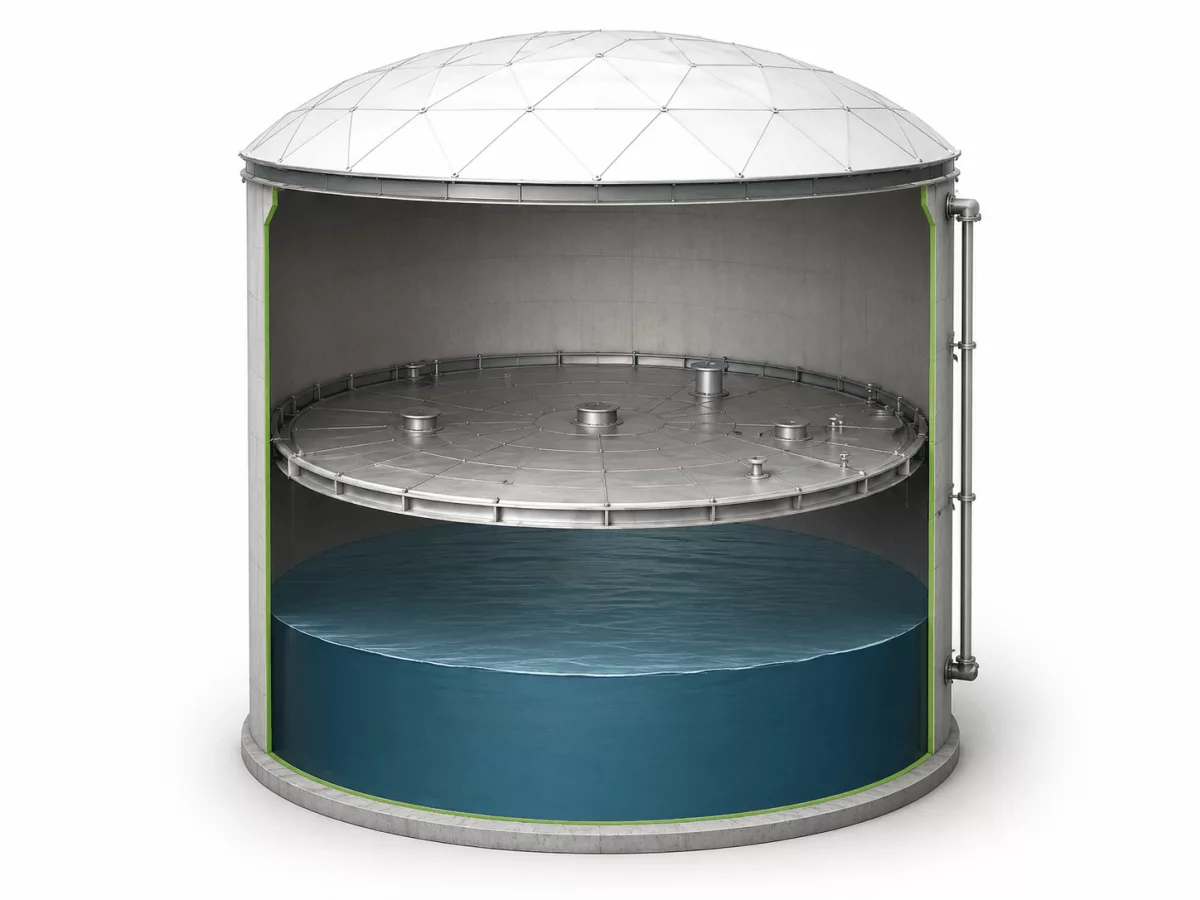
Unlike a conventional fixed roof, an internal floating roof rises and falls with the product level inside the tank. By following that level, the deck reduces the amount of liquid surface directly exposed to the vapor space.
The concept is straightforward, but effective floating-roof performance depends on much more than the deck itself. Roof construction, buoyancy, seals, tank geometry, fittings, stored-product compatibility and inspection requirements all need to be considered as part of a complete storage system.
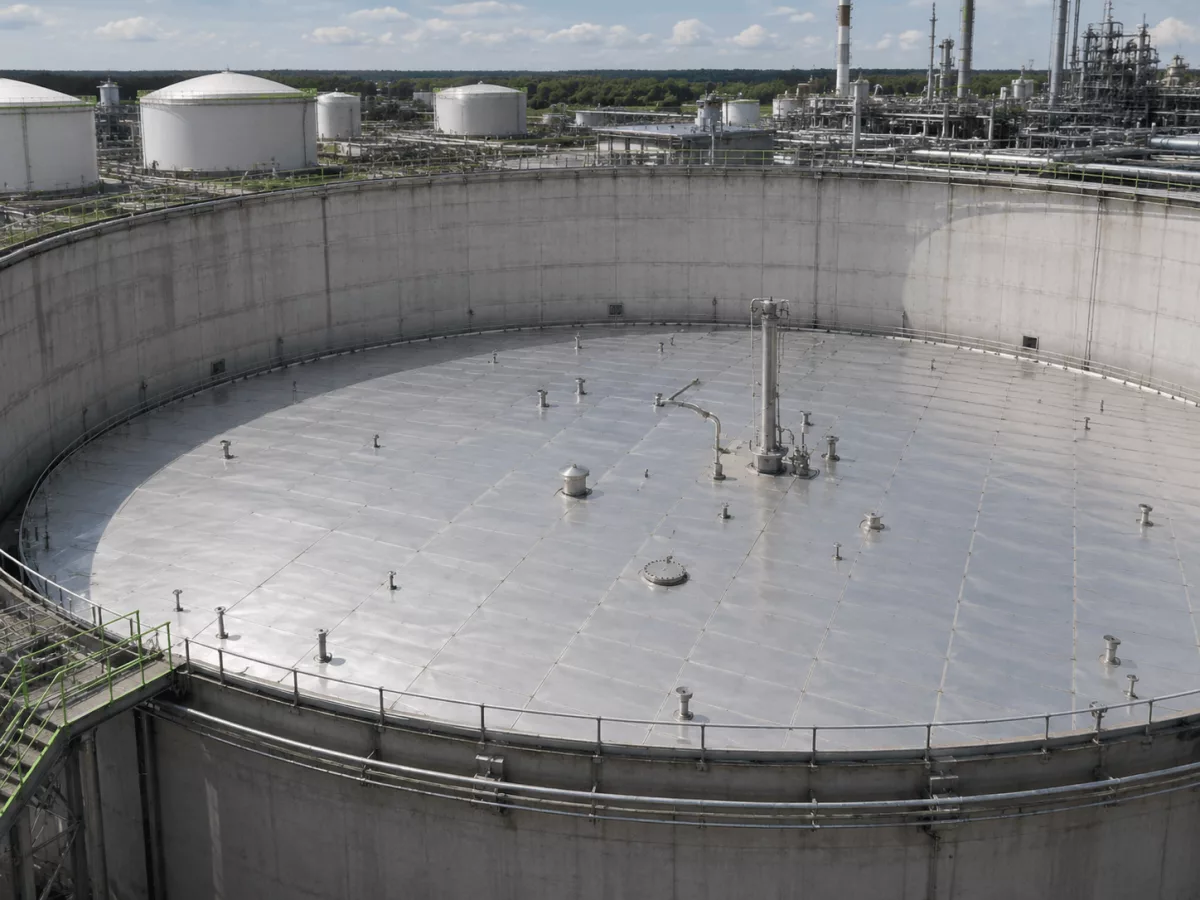
Quick answer: what is an aluminum floating roof?
An aluminum floating roof is a lightweight internal deck installed inside a storage tank that moves vertically as the stored liquid level rises and falls.
Its purpose is to reduce the exposed liquid surface and the vapor space immediately above the stored product, helping limit evaporation and product losses.
The roof normally operates inside a tank equipped with a fixed roof or dome and requires a perimeter sealing system between the floating deck and the tank shell.
Why storage tanks use internal floating roofs
In a conventional fixed-roof tank, a vapor space remains between the liquid surface and the roof.
As the liquid level, temperature and pressure change, vapor can be generated within this space.
An internal floating roof addresses the problem by creating a movable barrier much closer to the stored liquid.
The floating roof does not eliminate every possible emission point. Rim seals, deck fittings and other penetrations still need to be designed appropriately.
For this reason, roof performance should be viewed as the result of the complete floating system rather than the deck material alone.
Why aluminum is used for floating roof construction
Floating roofs can be manufactured from different materials and configurations.
Aluminum is particularly useful when designers require a combination of relatively low structural weight, modular construction and resistance to suitable industrial environments.
One important engineering consideration is the relationship between structural capacity and weight.
The floating deck must support its own components, fittings and specified personnel loads while maintaining adequate buoyancy.
A lighter roof system may also reduce the load transferred to other tank components compared with heavier structural alternatives, depending on the actual design.
How an aluminum pontoon floating roof works
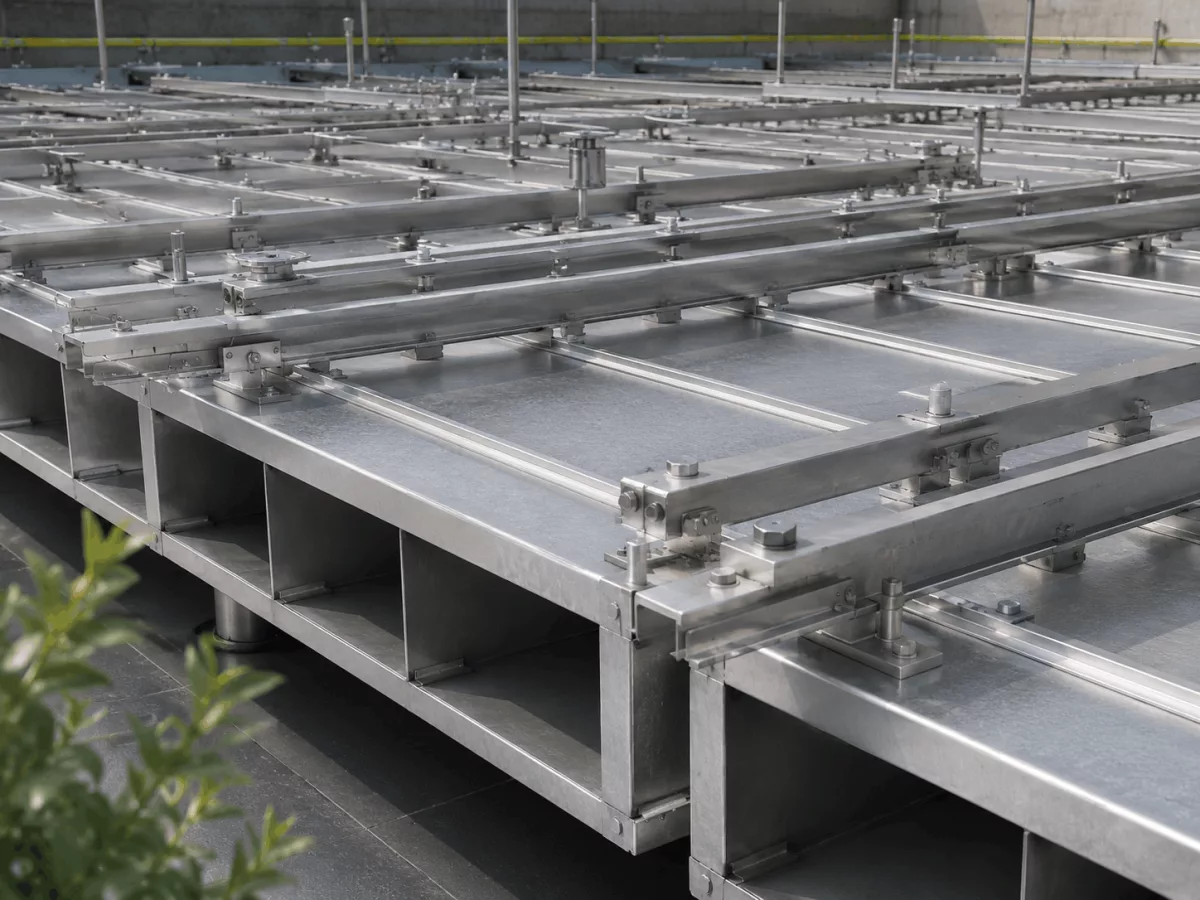
A pontoon-type internal floating roof uses buoyant elements to support the deck.
As the liquid level increases, the floating structure rises. When the level falls, the roof moves downward.
The roof must remain stable while accommodating:
- Changes in product level.
- Operational movement.
- Deck fittings.
- Seal loads.
- Maintenance activities.
- Variations in tank geometry.
Buoyancy is therefore only one aspect of the system.
Structural connections, deck configuration, pontoon integrity and the perimeter interface with the shell are equally important.
Aluminum floating roofs and evaporation control
One of the main reasons for installing an internal floating roof is to limit product evaporation.
When a large portion of the liquid surface is separated from the tank vapor space by the floating deck, less product is directly exposed.
This is particularly relevant for storage of products that are sensitive to evaporation or have significant vapor pressure.
However, actual performance depends on more than simply installing a floating roof.
Rim sealing, fittings, seams and operating conditions also influence emissions.
The importance of the floating roof seal
An internal floating roof cannot be manufactured exactly to the internal diameter of the tank.
A gap has to remain between the deck perimeter and tank shell so that the roof can move vertically without binding against the wall.
This annular rim space must therefore be sealed.
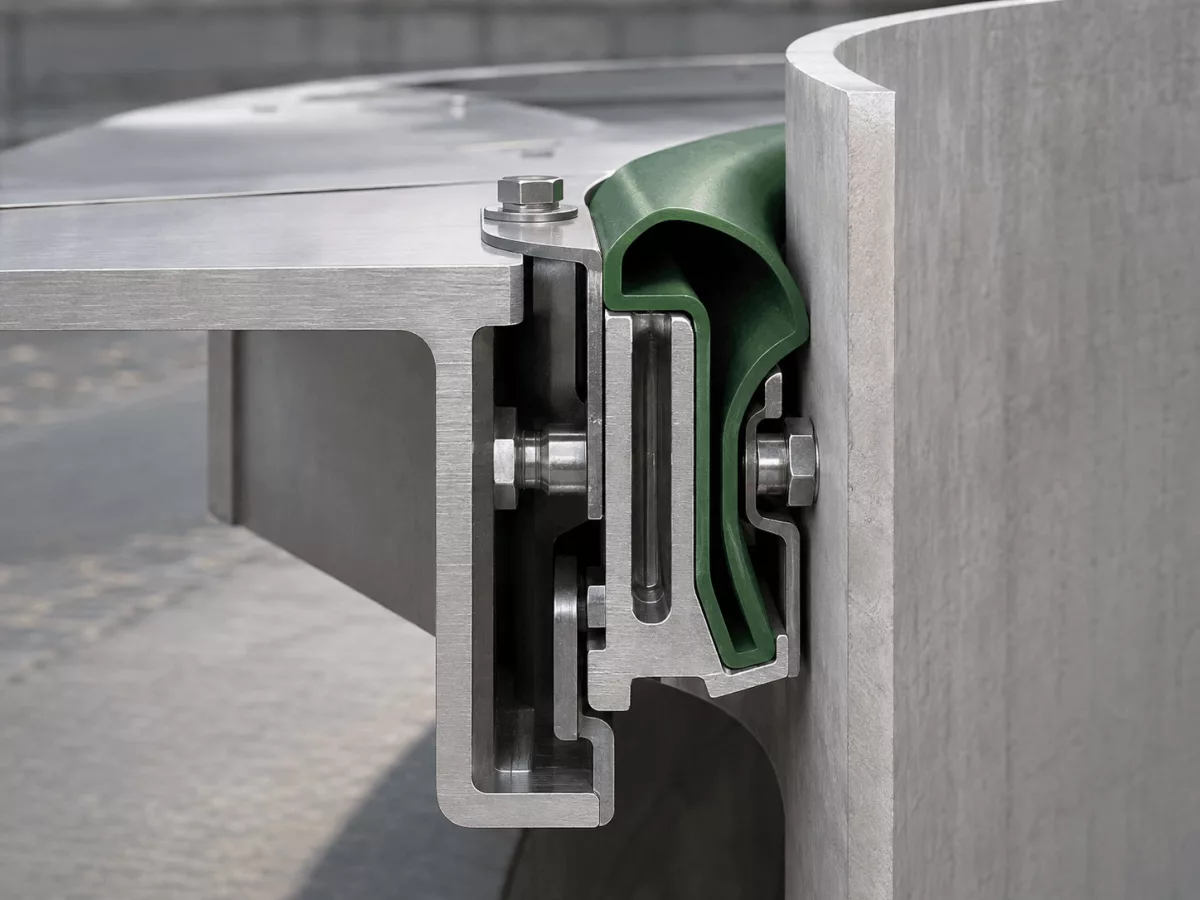
An internal floating roof seal provides the flexible interface between the moving deck and stationary shell.
Depending on the application, the system can include:
- Primary seals.
- Secondary seals.
- Mechanical shoe arrangements.
- Resilient seals.
- Wiper-type seals.
- Other compatible rim-sealing designs.
The relationship between the roof and seal is therefore critical: a technically advanced floating deck cannot compensate for an incorrectly selected or poorly maintained rim seal.
What engineers should consider when specifying an aluminum floating roof
An internal floating roof should not be selected solely according to tank diameter.
A complete specification requires several engineering inputs.
Stored product
The stored liquid influences material selection, sealing system and general roof configuration.
Fuel, petrochemical products, solvents, chemicals and high-value liquids may present very different compatibility requirements.
Tank diameter and geometry
The actual internal dimensions of the tank must be considered.
Tank shells are not always perfectly cylindrical throughout their entire height.
Fabrication tolerances, welds, settlement or historical deformation can affect the available rim space.
For retrofit projects, measurements of the existing tank can therefore be more useful than relying only on original drawings.
Floating roof buoyancy
The system must maintain suitable flotation under the required operating conditions.
Engineering design has to consider dead load, fittings, seal forces and specified live loads.
Roof fittings
Internal floating roofs frequently require fittings such as:
- Support legs.
- Manways.
- Sample points.
- Gauge poles.
- Anti-rotation systems.
- Vents.
- Grounding or bonding arrangements.
Each penetration represents an interface that requires appropriate engineering.
Seal configuration
The available rim space and stored product influence the selection of the floating roof seal.
A primary seal may be sufficient under some design frameworks, while other installations require or benefit from an additional secondary seal.
Maintenance access
Maintenance should be considered at the design stage.
Operators need to assess how the floating deck, pontoons, seals and fittings will be inspected throughout the operating life of the tank.
Internal versus external floating roofs
The terms internal and external floating roof describe two different tank arrangements.
An external floating roof is normally installed in an open-top tank and is directly exposed to weather.
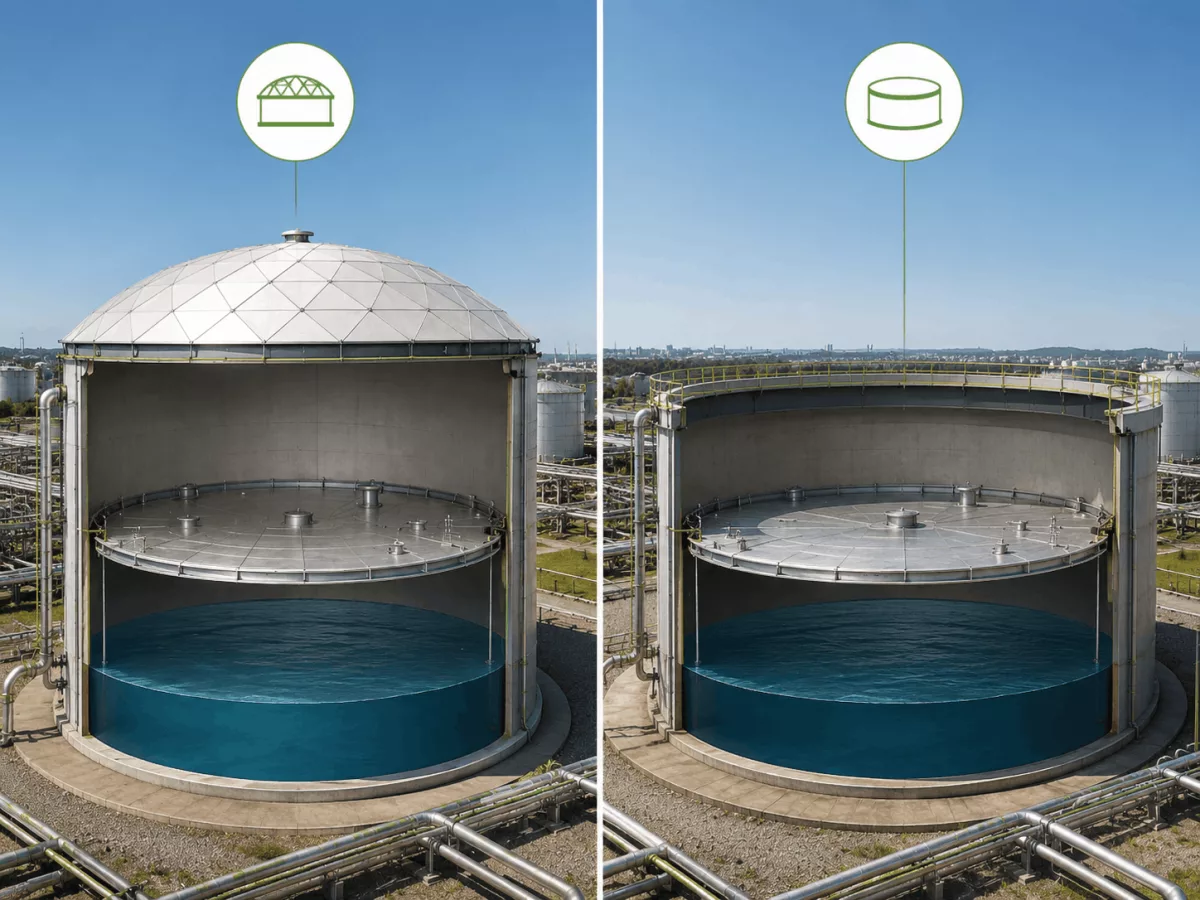
An internal floating roof operates beneath a fixed roof or dome.
The fixed cover protects the internal deck from direct rain, wind and snow exposure, while the internal floating roof follows the stored liquid.
This distinction influences:
- Structural design.
- Drainage requirements.
- Seal configuration.
- Environmental exposure.
- Inspection practices.
- Roof materials.
Aluminum floating roofs and geodesic domes
An internal floating roof can form part of a larger integrated storage system.
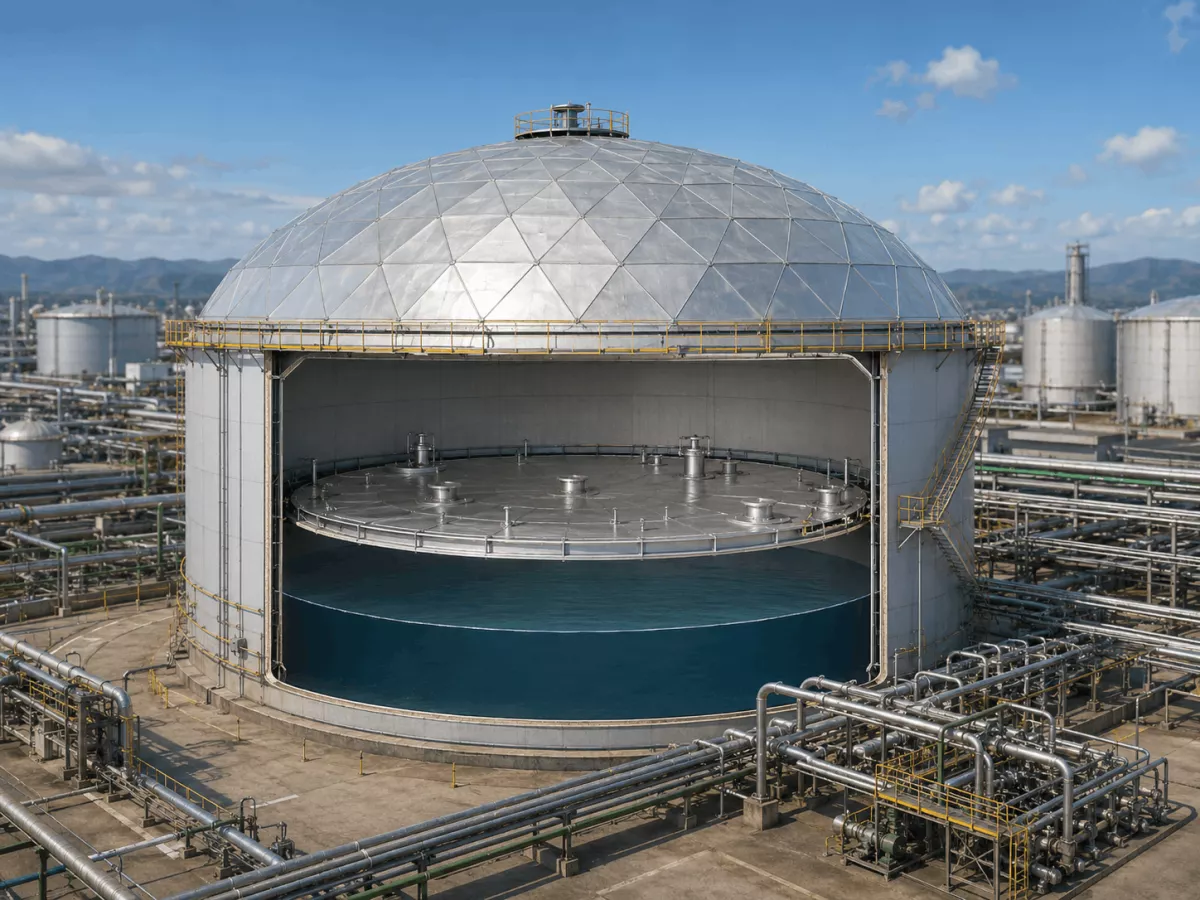
One common configuration combines an internal floating roof with an aluminum geodesic dome.
The two components perform different functions.
The floating roof controls the interface near the stored product.
The dome forms the fixed upper cover of the storage tank.
TAC Enviro offers its aluminum geodesic dome systems as part of its industrial tank portfolio.
Combining an internal floating roof, appropriate tank seals and a fixed dome allows each component to address a different part of tank operation.
Why modular installation matters in retrofit projects
Many floating roof projects involve tanks that are already in service rather than entirely new installations.
Retrofit projects create additional challenges.
Components may need to be transported through existing tank openings and assembled inside the structure.
Tank modifications should also be minimized where practical.
For operators, retrofit planning should evaluate:
- Available tank access.
- Internal obstructions.
- Columns or structural members.
- Existing roof fittings.
- Shell condition.
- Seal replacement.
- Installation sequence.
- Inspection requirements.
- Planned shutdown windows.
A modular floating roof can be advantageous in these situations because large preassembled components do not necessarily need to enter the tank as complete structures.
Personnel access and structural requirements
A floating roof is an operating piece of industrial equipment rather than simply a cover.
During inspection and maintenance, personnel may need to access portions of the deck under controlled conditions.
The structural design therefore has to account for the loads defined for the project.
Actual access procedures must nevertheless follow the tank owner's safety procedures and applicable confined-space and industrial-safety requirements.
Maintenance considerations for aluminum floating roofs
Low maintenance does not mean no maintenance.
Internal floating roofs should form part of the tank inspection strategy.
Areas requiring attention can include:
- Pontoon condition.
- Deck integrity.
- Structural connections.
- Rim seals.
- Fittings.
- Support legs.
- Corrosion or chemical attack.
- Abnormal deformation.
- Product accumulation.
- Grounding or bonding components.
The correct inspection interval depends on operating conditions, stored product and applicable requirements.
Aluminum floating roofs as part of an emission-control system
A floating roof should not be considered a standalone environmental device.
Its performance is connected to several other tank elements:
- Rim seals.
- Deck seams.
- Roof fittings.
- Fixed roof or dome.
- Vents.
- Monitoring systems.
- Operational procedures.
For engineering teams, this means that replacing one component without evaluating the rest of the tank may not produce the intended operational outcome.
TAC Enviro and aluminum floating roof systems
TAC Enviro develops equipment and engineering solutions for industrial storage tanks in petrochemical, water and environmental applications.
Its aluminum floating roofs are represented within the TankPontoon® internal floating roof system, which can be configured in aluminum or stainless steel.
The current system incorporates an interconnected structural grid, floating pontoons and compatibility with primary and secondary sealing arrangements.
TAC's wider portfolio also includes floating roof sealing systems and aluminum geodesic domes, allowing the floating deck, rim seal and fixed tank cover to be assessed as related parts of the storage system.
Choosing an aluminum floating roof should begin with tank data
No internal floating roof should be specified using a generic design assumption.
Before equipment selection, engineering teams should collect information on:
- Tank diameter.
- Shell geometry.
- Stored product.
- Operating temperature.
- Liquid density.
- Existing tank roof.
- Internal obstructions.
- Rim space.
- Required seals.
- Fittings.
- Maintenance strategy.
- Applicable environmental requirements.
This information provides the basis for determining whether an aluminum pontoon roof, another internal floating-roof configuration or a different storage solution is appropriate.
A lightweight component with a significant operational role
Aluminum floating roofs can play an important role in modern industrial tank storage by reducing exposed liquid surface, supporting evaporation-control strategies and providing a modular internal barrier that follows the stored product level.
Their effectiveness, however, depends on proper integration.
The floating deck, tank shell, pontoons, fittings, rim seals and fixed roof or dome all interact.
For this reason, the strongest engineering approach is not to ask simply whether an aluminum floating roof is suitable, but rather which complete floating-roof and sealing configuration is appropriate for the tank, product and operating conditions.
Explore aluminum internal floating roof systems
Engineering teams evaluating new storage tanks or retrofit projects can review TAC Enviro's TankPontoon® internal floating roof configuration and related tank sealing solutions.
View TankPontoon® systemsFrequently asked questions about aluminum floating roofs
What is an aluminum floating roof?
An aluminum floating roof is an internal movable deck installed inside a storage tank that rises and falls with the stored liquid level and helps reduce exposed liquid surface.
Why is aluminum used for internal floating roofs?
Aluminum can provide a useful combination of relatively low structural weight, suitable corrosion resistance and modular construction when correctly selected for the stored product and operating conditions.
Do aluminum floating roofs reduce VOC emissions?
Internal floating roofs are used as part of evaporation and VOC-control strategies by reducing the liquid surface directly exposed to the tank vapor space. Actual performance also depends on seals, fittings and operating conditions.
What is the difference between an internal and external floating roof?
An external floating roof operates in an open-top tank and is exposed to weather, while an internal floating roof operates beneath a fixed roof or dome.
Do aluminum floating roofs require tank seals?
Yes. A flexible sealing system is required between the moving roof perimeter and stationary tank shell.
Can an aluminum floating roof be installed beneath a geodesic dome?
Yes. Internal floating roofs can operate inside storage tanks protected by compatible fixed-roof systems such as aluminum geodesic domes.
Can an aluminum floating roof be retrofitted?
Potentially, yes. Existing tank geometry, access, internal obstacles, shell condition and applicable engineering requirements must first be assessed.
Technical note: floating roof configuration, materials, sealing systems and structural requirements should always be validated against the actual tank, stored product, operating conditions and applicable engineering standards.


